

US development fund providing micro lending to small farmers
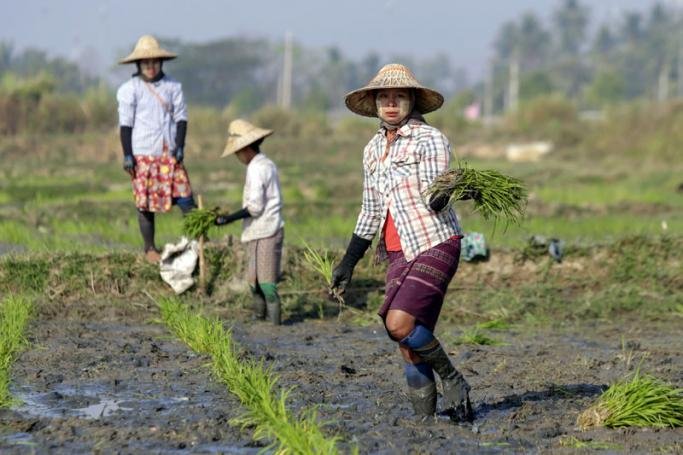
The Overseas Private Investment Corporation (OPIC), the U.S. Government’s development finance institution, has committed $8 million to Proximity Finance to support expanded micro lending to rural borrowers, primarily smallholder farmers, in Myanmar.
OPIC Chief of Staff Eric Jones and Proximity Designs CEO Jim Taylor, and Proximity Finance Head of Finance Sein Nwe Oo signed the commitment. The Skoll Foundation, a long-term supporter of Proximity Finance, has committed an additional $2 million of subordinated debt as part of the co-financing package, according to a press release from the US Embassy on 3 April.
Rakkhine State Investment Fair 2019
February 18, 2019 Japan’s top envoy to Myanmar said that economic development is an answer to Rakhine’s conflict and that Tokyo is considering providing aid for the state. “If there is economic development, I believe that there will be no conflict,” Japanese Ambassador Ichiro Maruyama said ahead of a Japan-backed investment fair in Ngapali. The first Rakhine Investment Fair will be held on February 21 and 23, supported by the Myanmar Investment Commission and the Rakhine state government, and co-organised by Japan International Cooperation Agency (JICA) and the Japan External Trade Organization (JETRO). Despite its natural resources and strategic location, Rakhine is among the poorest in the country. The state’s poverty rate – according to a World Bank report – is 78 percent, almost double the national rate of 37.54 percent. All communities in Rakhine suffer from poverty, poor social services and a scarcity of livelihood opportunities, the Rakhine Commission stated in its August 2017 report. Commercial projects are scarce: there are oil and gas pipelines currently running from central Rakhine to China’s Yunnan province. Chinese state-owned CITIC Group is leading a consortium to negotiate with the government on a proposed deep-sea port and Special Economic Zone in Kyaukpyu. Last year, the transport ministry signed a Memorandum of Understanding (MoU) with India to appoint a private operator for Sittwe Port. Mr Maruyama said conflicts are the first thing which springs to mind when one hears of Rakhine, thus it is important to “settle those matters” and “at the same time, economic development is also important.” “The objective of Japanese government and Japanese firms is for the comprehensive development in Myanmar, including the politics, the economy and other areas. There is only one approach for meeting that objective – it is to cooperate [in terms of both] government-to-government and private sector-to-private sector to solve those issues”, said the ambassador. To that end, Japan will throw its weight behind Rakhine’s economic development, particularly improving road connectivity and access to electricity via Overseas Development Assistance (ODA). “If there is economic development, I believe that there will be no conflict.” – Ichiro Maruyama, Japan’s ambassador According to Mr Maruyama, Japanese investors are interested in agriculture, fishery and tourism sectors in Rakhine but have not made any investment decisions. The state government will work with those businesspeople after the fair to move forward any potential interest. Obstacles abound. Poor infrastructure and security issues are the key deterrents for Rakhine to attracting private investments. The ambassador did not mention human rights risks for businesses as a key challenge. “We can’t do anything if there is no road and electricity. That is why Japanese government will provide ODA to fulfil the need of infrastructure,” he explained. The emphasis in development is in line with Japan’s approach. Last February, Tokyo announced a US$20.6 million funding in humanitarian assistance to address the ongoing human rights crisis in northern Rakhine, where an extensive military crackdown in 2017, following attacks by the Arakan Rohingya Salvation Army, prompted about 730,000 Muslim refugees to flee into Bangladesh. The two projects, the embassy said via a press statement, are to “improve humanitarian and development situation in Rakhine State with the approach of the humanitarian-development nexus, which is strongly advocated by the government of Japan.” Critics said pledges of humanitarian assistance are alone insufficient and that development should not take precedence over human rights concerns. In addition, there are risks for private investors to be implicated in human rights violations detailed in the report by the UN’s Independent International Fact-Finding Mission on Myanmar. One risk is the alleged appropriation of land which belongs to the refugees. The report included instances of land confiscations. Rakhine State Investment Fair will be held from February 21 to 23 in Ngapali Beach, Thandwe.
State Counsellor meets with people from Kengtung, Mongton, Monghsat townships, discuss peace, rule of law and development
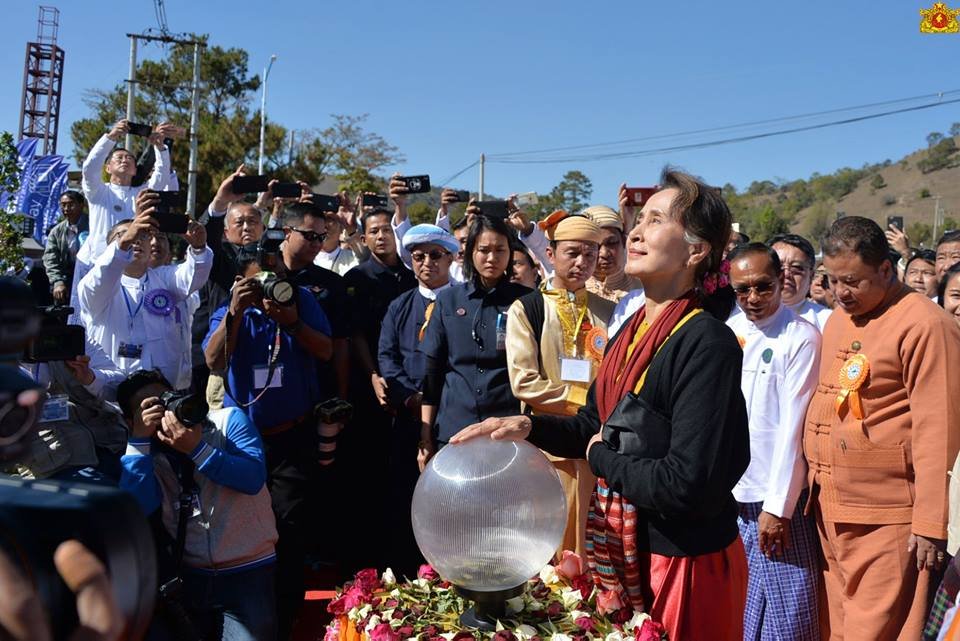
State Counsellor Daw Aung San Suu Kyi met with the local people during her visit to Kengtung, Mongton and Monghsat yesterday, discussing the issues related with peace, the rule of law and development.
Speaking at the meeting the people in Kengtung yesterday morning, the State Counsellor stressed the importance of trust between the government and the people to perform the duties by the elected government.
Invest Myanmar Summit 2019
28-29 January 2019, MICC-2 Nay Pyi Taw, Myanmar Invest Myanmar Summit 2019 is a collaboration between the Union Government of Myanmar, the Region States of Myanmar and the business community to create a platform for businesses to meet. The two-day event is designed to provide international and local investors the opportunity to discover the investment potential of Myanmar. It is a platform where Regional Government officials will also showcase business potential in their own States.
Russia won’t support any UN move to pressure Myanmar
Russia has reiterated its position to resolve Rohingya crisis through “bilateral negotiations” saying it will not support any resolution in the United Nations Security Council (UNSC) to put pressure on Myanmar engaging the UN.
“China has its own policy. Our position is very similar to Chinese one that this issue (Rohingya) should be settled through negotiations. It’s a bilateral issue,” said Russian ambassador to Bangladesh Alexander I. Ignatov at a seminar in the city on Thursday, reports UNB.
The UNSC is thinking of fresh actions to push Myanmar to work with the UN to address the Rohingya crisis. Russia and China have so far boycotted discussions on a British-drafted resolution.
Referring to the UK-initiated draft resolution on finding sort of comprehensive solution to Rohingya crisis, Ambassador Ignatov said they do not support 1 percent of that kind of particular draft resolution. “I don’t believe it’ll be adopted.”
Asked why Russia has failed to extend support in the UNSC and beyond on Rohingya issue when Russia never faltered in extending support to Bangladesh, the Ambassador said, “Russia hasn’t failed in this regard. It’s completely wrong to say so.”
He explained further saying they have different approach compared to some other countries and said putting pressure on Myanmar, they believe, will create complexities as Bangladesh and Myanmar signed bilateral agreement on repatriation of Rohingyas.
The Russian ambassador said they believe in proper implementation of the bilateral agreement on repatriation.
He, however, said Rohingyas should be allowed to go back to their place of origin and of course the situation for them should be humane.
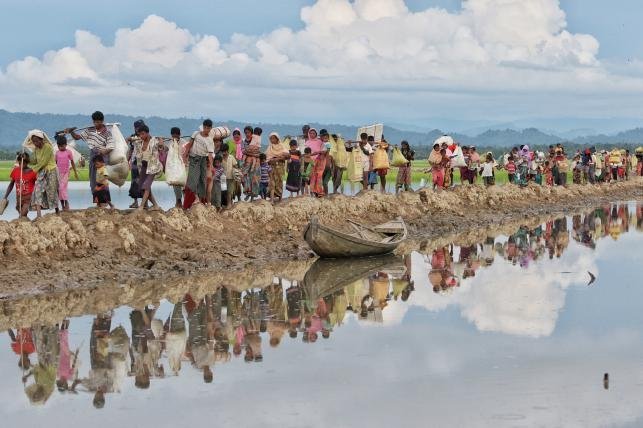
Bangladesh and Myanmar formed the Joint Working Group (JWG) in December 2017 to start the repatriation of around 900,000 Rohingyas who fled a brutal military crackdown in August 2017.
However, the Rohingya repatriation plan, as agreed by Bangladesh and Myanmar to begin in mid-November this year, failed.
The seminar on ’47 Years of Friendship: Bangladesh-Russia Relations’ was held at Bangladesh Institute of International and Strategic Studies (BIISS) on Thursday.
Foreign secretary M Shahidul Haque attended the seminar as the chief guest with president of Bangladesh-Russia Friendship Society AAMS Arefin Siddique in the chair.
Myanmar Military Declares 4-Month Ceasefire in Shan, Kachin Conflict Zones
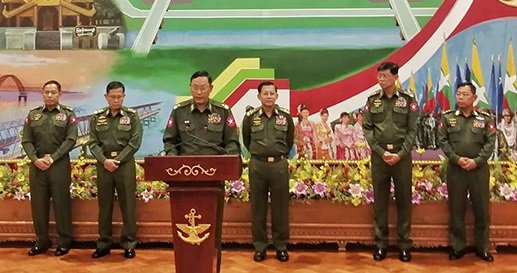
The Myanmar Military on Friday declared a unilateral four-month ceasefire in Kachin and Shan States, the northern and eastern regions of the country that been under military conflict for much of the country’s 70 years of independence from Britain. The move is the first truce ever initiated by the powerful military, which is known as the Tatmadaw, and is aimed at breathing life into a shaky peace process by enticing separatist ethnic armies to join talks with the central government, a key policy goal of national leader Aung San Suu Kyi. “The Tatmadaw (military) will cease all military operations in each command from Dec. 21 to April 30,” in order to allow negotiations with ethnic armed groups, according to the statement issued by the Office of the Commander-in-Chief on Friday, after Army chief Senior General Min Aung Hlaing met the Press Council. The order covers conflict zones in Kachin State and Shan State, where decades of conflict have displaced tens of thousands of residents. But it excludes the western state of Rakhine, where an army crackdown in 2017 forced some 720,000 persecuted Rohingya Muslims into Bangladesh and where the military has been engaged in fighting the Rakhine Buddhist Arakan Army. During the unilateral ceasefire period, the National Reconciliation and Peace Center (NRPC) would hold peace negotiations with the ethnic armies in their respective areas, with ceasefire-related issues on the agenda. “I see the military’s move as a generous approach to peace. It is very good,” Intunkha Naw San, a lower house member of parliament for Myitkyina, the capital of Kachin state, told RFA’s Myanmar Service. “As local people in conflict areas have been suffering for a long time, they will welcome the military’s statement. We hope the peace process will get smoother than before because of the government army’s attitude in this statement,” said Khun Maung Thaung, Chairman of Ethnic Affairs and Internal Peace Committee. Cautious welcome in north The truce received a cautious welcome from the armed ethnic groups, many of which have long called for the military to take such a step and resisted the army’s demands that they lay down their weapons first. “Most groups in southern Shan State are NCA groups. Now, military released a ceasefire statement for the north and we welcome it,” said Khun Myint Tun, chairman of the Pa-O National Liberation Organization (PNLO.) The nationwide cease-fire accord (NCA) of October 2015 was signed by 10 ethnic rebel groups, but several others have held out, while some have expressed interest in talks. “We welcome the military’s statement as a good step, but we see it is still difficult to have peace. It means military will halt fighting in some places, but will keep fighting in the other places,” said Ta Phone Kyaw, general secretary of the Taaung National Liberation Army (TNLA), one of the ethnic armed groups that has been fighting the military in Shan State and has not signed the NCA. “We still have a lot to discuss. The statement also said the military will talk with ethnic armed groups and we want to talk with it as soon as possible,” he added. “We now know government army’s attitude and we welcome it. It is a very good step for the peace process,” said Rev. Dr. Hkalam Sam Sun, General Secretary of the Kachin Baptist Convention (KBC). “If government troops are truly withdrawn instead of just releasing a statement, we will see a brighter way to peace,” he added, noting that the Kachins want to discuss the return to their villages of internally displaced persons scattered across the region be recent rounds of fighting. Rakhines excluded and wary Ethnic Rakhine leaders, whose armed group remains outside the peace process and excluded from Friday’s declared ceasefire, remain wary about the army’s intentions, suggesting the Tatmadaw was making a tactical move while it faced international criticism for the Rohingya crisis and fights on numerous fronts. “It is hard to say the military is stepping back,” Tun Zaw, general secretary of the Arakan National Council (ANC). “When we have international pressure and more fighting areas not only in the north, but also in the west, it might be difficult for the government army to conduct military operations on all fronts,” he told RFA. “It is as if the military is trying to reduce the fighting fronts during this period,” Tun Zaw. Zaw Htay, the government spokesman, noted that the Arakan Army was now fighting the national army and “the Rakhine situation is very complicated and we all have to be very careful.” “Rakhine ethnics also should think about it. They said they want equality and self-determination. If so, they have to move forward by way of the NCA,” he said, referring to the peace process. The ceasefire was announced on the same day that European Union said it will slap asset freezes and travel bans on seven more army and border police officials “for serious human rights violations committed against the Rohingya population, ethnic minority villagers or civilians.” The latest move brings to 14 the total number of people in Myanmar under EU sanctions for abuses stemming from a violent crackdown in August 2017 on Rohingya Muslims by security forces that drove more than 725,000 members of the minority group to Bangladesh. A previous crackdown in northern Rakhine in October 2016 forced out more than 90,000 Rohingya. An extensive report issued in September by United Nations investigators detailed violence by Myanmar security forces and called for the prosecution of top military commanders on genocide charges at the International Criminal Court or by another criminal tribunal. Reported by Win Ko Ko Lat, Wai Mar Tun and Kyaw Thu for RFA’s Myanmar Service. Translated by Khet Mar. Written in English by Paul Eckert.
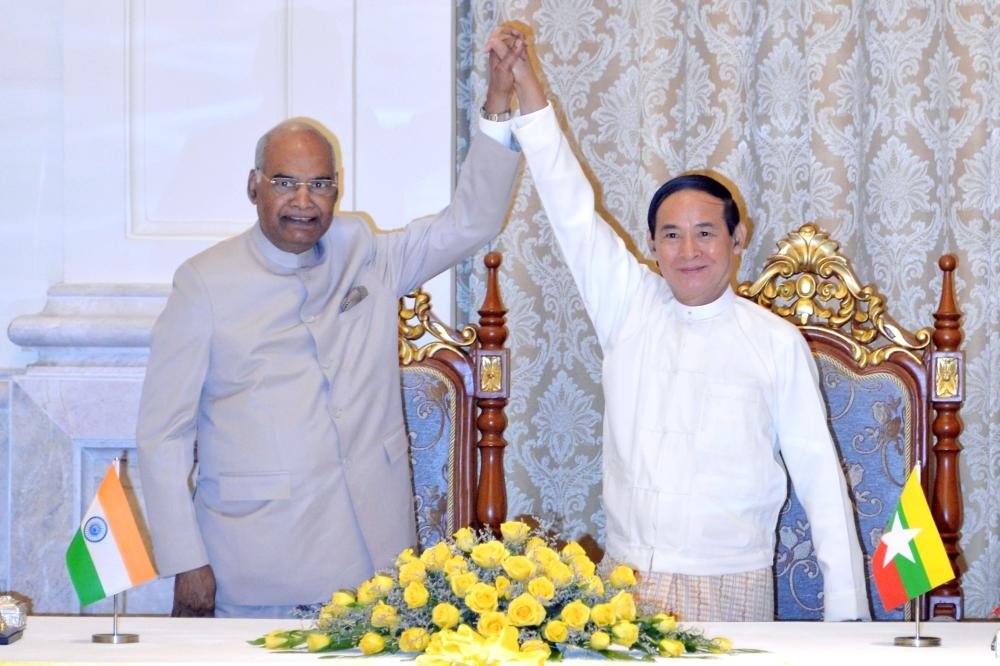
Indian President Expresses Support for Myanmar During State Visit
YANGON—The visiting Indian President Ram Nath Kovind has expressed his support for the Myanmar government during a state visit this week amid growing domestic and international pressure.
The president is on his first official visit to Myanmar at the invitation of President U Win Myint for a five-day trip which began on Monday and will conclude on Friday.
“In India, we are aware of the challenges Myanmar faces in taking forward the peace process, national reconciliation and economic recovery. I want to tell you that the government and people of India stand by you,” said the Indian president at a dinner hosted by President U Win Myint on Tuesday.
TIMELINE: Eight Decades of Myanmar-Japan Relations at a Glance
Myanmar State Counselor Daw Aung San Suu Kyi left Myanmar for Japan on Friday. It is her third visit to the Land of the Rising Sun since 2013. Prior to that she had not visited the country since her sojourn at Kyoto University as a researcher in 1985-86. This year marks the 64th anniversary of diplomatic relations between Myanmar and Japan. But the two countries’ modern relations can be traced back further, to the arrival of Japanese military officer Colonel Keiji Suzuki in Rangoon in 1940.
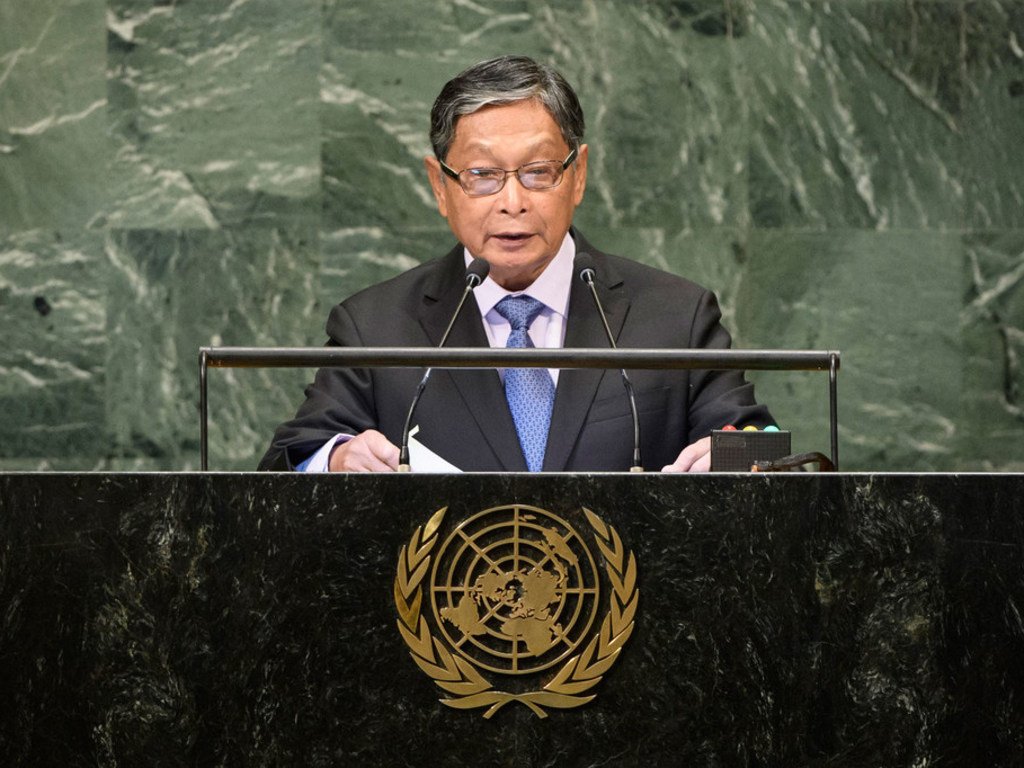
Myanmar ‘resolutely rejects’ ICC ruling on Rakhine; voices ‘serious concerns’ over UN human rights report
“The ICC decision was made on dubious legal grounds and applied to a situation where domestic remedies have not yet been exhausted,” said Kyaw Tint Swe, Union Minister for the Office of the State Counsellor, Daw Aung San Suu Kyi.