Myanmar Economic Monitor June 2019
Key Findings: Myanmar’s economy is slowly picking up speed and regaining stability after a volatile 2018, supported by subsiding price and exchange rate volatility.
European Strategy for a Strengthened Partnership with Civil Society in Myanmar
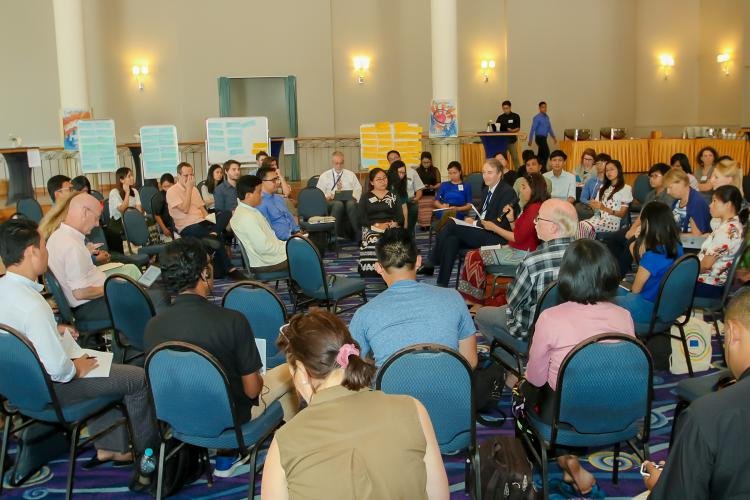
“Myanmar has taken a bold decision to become a full democracy. To reach this ambitious goal, support from civil society is critical. It allows the inclusion of wider aspirations and ensures that the voices and needs of the people are heard. For a country with Myanmar’s history and current challenges, it is particularly important to give civil society the necessary space to promote equality, justice, fairness and peace” – said EU Ambassador Kristian Schmidt at the launch of the European Strategy for a Strengthened Partnership with Civil Society in Myanmar (2018-2020) on 4 April 2019 in Yangon. Since Myanmar’s democratic transition started in 2011, civil society in the country has undergone a major transformation. Today, civil society organisations (CSOs) across Myanmar are not only providing essential services but have increasingly become strong advocates of a wide range of causes and communities, including the ones that live in remote areas. The EU-CSO Partnership Strategy seeks to support the creation of an enabling environment for civil society to participate in policymaking and policy implementation processes at the local and national levels. The strategy is a follow up to the EU Roadmap for Engagement with Civil Society in Myanmar (2014-2017) and was developed through extensive consultations with civil society in across the country in 2018. The launch event hosted over 120 civil society organisations from Yangon and other regions of Myanmar, INGOs, representatives of EU member states, donors, research institutes and academia. Participants discussed the trends impacting civil society, as well as the steps needed to support, protect and promote civic space. The EU-CSO Partnership Strategy will be implemented over the next two years and will engage organisations in various forums to share research findings, analyze issues and develop policy recommendations based on themes prioritised by civil society. The EU-CSO Partnership Strategy will also support the outreach of civil society organisations through hosting civil society fairs and a newsletter. Delegation of the European Union to Myanmar (4/4/2019 News Stories)
Toyota comes to Myanmar
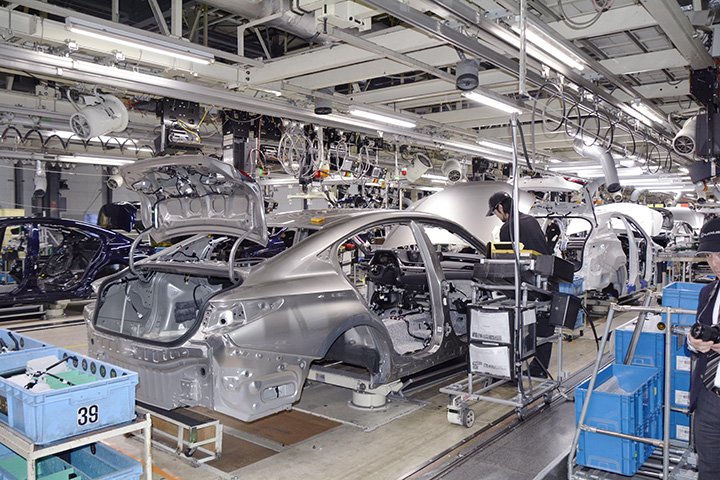
Toyota Corporation (Yangon Branch) released a public announcement on 30 May about the formation of Toyota Myanmar (TMY) Company and the establishment of an assembling plant at Thilawa Special Economic Zone in June. As it will pour US$ 52.6 million in the factory project that will be run with about 130 staffs, the country will get investment and job opportunities for its citizens. The factory will start assembling 2500 Toyota Hilux cars per year under Semi Knocked-Down system in 2021. So, the factory will fulfill the auto requirement of Myanmar and ensure customer satisfaction in Myanmar.
Toyota Motor Corporation of Japan will have a 85% share, and the Toyota Tsusho Corporation, 15% share in the Toyota Myanmar Co.,Ltd. The good news is that the factory begins producing standard Japanese car in Myanmar this month.
The factory will produce cars and provide services that will be most suitable for the country. Myanmar is inviting responsible investments, and the Japanese investment will help develop the country’s industrial sector and increase the number of technicians. As Toyota will strive for improvement of human resources and proficiency, it is a great opportunity for us to acquire technological knowhow.
Reviewing Myanmar-Czech relations
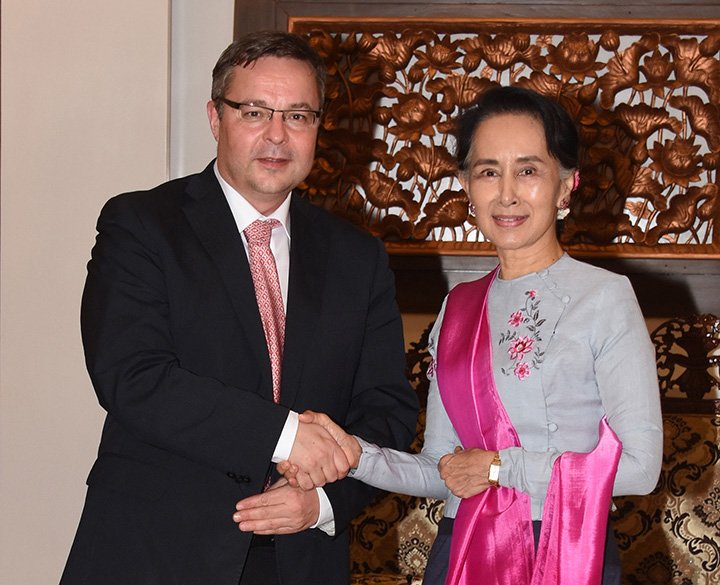
While Myanmar is in Asia, Czech is from Europe quit a far away land, but there are many similarities and interesting differences. Our State Counsellor Daw Aung San Suu Kyi is leaving for Prague very soon and it is timely to look through the connections between the two countries.
With reference to official records, Myanmar and Czechoslovak established diplomatic relations on 3rd January 1956. Before the establishment of diplomatic relations, there was a Consulate office in Yangon since 1953. Therefore, we can say that economic and social relations have started before the official diplomatic relation. Myanmar side received the Czechoslovak Embassy in Yangon in 1965 and opened its Embassy in Prague in 1965.
Myanmar positions itself in South East Asia bordering with powerful China and India and maintains its sea route to Andaman Sea and Indian Ocean. Myanmar regained its independence from British in 1948 and fell under military rule following the 1962 coup practicing the Socialist economy. Czech is a land locked country bordering with powerful German and once it was part of the powerful Austro-Hungarian Emperor. After the First World War, it became the independent nation named Czechoslovakia. As a Soviet bloc in the cold war, there were also civil movements to reform and Charter 77 and Velvet Revolution were world-known events which inspired many. In line with the peoples wish, the Czech Republic and Slovak Republic became separate independent entity.
Before the emergence of independent Czech and Slovak Republics, the embassy of Czechoslovak came to an end in Yangon on 31 December 1992. In response, Myanmar also closed its embassy in Prague on 1 January 1993. Since then Czech Ambassador in Bangkok was concurrently accredited to Myanmar and Myanmar Ambassador in Berlin to Prague. Although Myanmar’s action in closing its embassy seemed in nature of reciprocity, the ardent support of the President of the Czech and Slovak Federal Republic Mr. Vaclav Havel to Daw Aung San Suu Kyi, Secretary General of the NLD and his recommendation of her to the Nobel Peace Prize might play a role behind the closure of the embassy.
In short, after the 2010-2012 Myanmar’s reform period, Czech reopened its embassy in Yangon in 2014 and Myanmar is also re-opening its embassy in Prague this year. Therefore, the presence of the State Counsellor at the inauguration of the Chancery in Prague is righteous and appropriate. Czech Republic’s First President Mr. Vaclav Havel and Daw Aung San Suu Kyi have many similarities: prisoners of conscience in different formats, the highly respected leaders of democratic reform movement, strong believers of ethic and moral values and courageous leaders of the change. They admired and supported each other, but they never met in life. Being nine year senior to Daw Aung San Suu Kyi, Havel passed away in 2011 at the age of seventy-five. During the visit of Czech Deputy Prime Minister and Foreign Affairs Mr. Karel Schwarzenberg, the commemorative rose from Havel was officially handed over to Daw Aung San Suu Kyi. In fact, it was Havel’s wish to give a rose to her. But he could not do it in person. He could not see her in person. It was a tragic event for those comrades in democracy despite their mutual respect and same dream for human dignity they could never meet in life.
Havel’s forum 2000 also reserved a seat for Daw Aung San Suu Kyi although they well knew that she could not come because she was under house arrest. Only in 2013, she could attend the forum and she said Mr. Havel had given her the “flame of hope” during Myanmar’s darkest hours and that his writings had provided solace during long years of detention”. That bond of thirst for democracy and understanding become the basic foundation for future cooperation between the two countries. It is the right moment for us to enhance our engagement.
In size, Myanmar is bigger than Czech in 8.5 times, but for GDP Myanmar is only one-third of the Czech. While Myanmar’s population is over 53 million, Czech is just over 10 millions. Consequently, Myanmar’s per capita GDP is 1258$ and of Czech is over 20,000 $. For the Corruption Index, Myanmar stood at 29 and Czech at 59. In Competitiveness ranking, Myanmar is 131 (2016) and Czech is 29 (2018). For the Fragile State Index, Myanmar is 96.1 and Czech is 39. Therefore, Czech is small in size and less populated, but well advanced in economic and development, and as a result Myanmar can learn many things from Czech and there are definitely much to cooperate for mutual benefits.
The Czech Republic also supports Myanmar’s transition throughout its movement since 1988 up till now. Many political prisoners and oppositions frequented Prague and lobbied for the promotion of democracy and protection of human rights. Transition Program of the Czech Republic, People’s in Need and Central and Eastern Europe Legal Initiative Institute Prague has projects for Myanmar. As both countries have been transformed from Socialism to Democracy, Myanmar can take lessons from the Czech experience. The Czech Republic also takes care of some Myanmar refugees from third country and assists them to settle down in Czech. The Czech Republic initiated the democratic reform in the years 1990s and Myanmar reforms took shapes only in 2010s. Seeing through the Havel’s speech, many incidences in the process of reforms, his advice on fellow politicians, citizens and media are still valid for Myanmar at present time. Although geographically far apart, human nature and politics do not know the border.
The significance difference between Myanmar and Czech is related with its respective regional organizations. Czech had to work hard to become the member of the European Union after its political reform. Therefore, Czech political parties have to unite and seek the common ground with the EU. For Myanmar, it became ASEAN member even before it started political reform. As a result, whether becoming a member to ASEAN or not never became the part of political debate and Myanmar pays more attention on internal affairs.
On the march to democracy and different stages of transition, freedom, equality, coordination or partisanship among the political parties, rule of law, free and fair elections are the measurement and Myanmar has to do home-work on all fronts. To gauge the political stability, voters’ turn out, ratio of re-election of old parliamentarians and the new, engagement among different political parties are key indicators. Therefore, the success of reform does not only lie with the government in power, but the people and opposition political parties also need to play role.
To keep the momentum of reform, economic progress must be in control; the gap between rich and poor must be narrow down. Women empowerment, protection of the vulnerable, enhanced education level and outreach, raising the social service protection and better health care are also import task for the government.
The Czech Republic is now assisting Myanmar’s political and democratic reform through economic diplomacy. The two countries had the experience of cooperation during the Socialist era and Czech technician came to Myanmar for different factories projects and many Myanmar scholars went to Czech for further study. We enjoyed the cooperation in medicinal care, pharmaceutical products, stone carving, and establishment of sugar cane factory, glass factory and tyre factory. With Czech expertise on machinery, Myanmar can enhance its quality of pharmaceutical products, effective and value added production of natural gem stones without waste, and mechanization of agriculture. Myanmar is also a last destination of foreign investment in the promising land of South East Asia. Myanmar has great potential for economic development. It has GDP growth of 5.9 per cent in 2016, 6.4 percent in 2017 and 6.8 per cent in 2018. The government enacted the new Investment law and created the Special Economic Zones in line with the Myanmar Sustainable Development Plan. Therefore, Myanmar-Czech economic forum is conducted annually and conducts the business matching. Recently the Czech government opens an Honorary Consulate in Mandalay and appoints Daw Hla Hla Wai, a Myanmar Business lady as an Honorary Consul. Myanmar rice is now available at supermarkets in Czech. Many Vietnamese are doing business in Czech successfully and there are also chances for Myanmar trade and commerce.
Among the similarities and differences, the interesting one is that there is a young Czech monk named Ashin Sarana who can speak fluent Myanmar and preach Buddhism both in Myanmar and Pali (Sanskrit) languages. Ashin Sarana arrived Myanmar on 19 May 2012 and practiced meditation at Shwe-U-Min-tawra and now the Czech monk is giving guidance in Buddhism at the Sa-khan-gyi-tawra near Hlegu, in Yangon Region. In the same manner, Myanmar scholar of 1960s, U Min Latt gave Myanmar language lectures for Czech in Prague and contributed many Myanmar history books in Czech. That is the non-governmental people to people relations which can facilitate the further economic and trade promotion.
Although both countries are geographically far apart, we have many connections and similarities. Economic relations and people to people contacts also strengthen our cooperation and political relations. Apart from the 1966 visit of General Ne Win to the Czechoslovakia, the recent State Counsellor Daw Aung San Suu Kyi’s visit is the first high level visit in decades. It is significant not only for Myanmar-Czech bilateral relations, but also for Myanmar- EU relations. May this visit bring mutual benefits, success and love among our peoples!
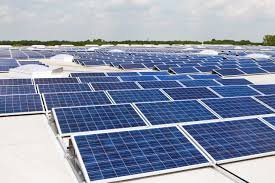
1,300 Villages to Receive Solar-Generated Electricity in FY2019-20
MANDALAY—Over 1,300 villages in rural areas of five regions will get access to electricity through solar power in fiscal 2019-20 as part of the National Electrification Project (NEP), according to the Ministry of Electricity and Energy.
The ministry will team up with the Rural Development Department overseen by the Ministry of Agriculture, Livestock and Irrigation to supply solar power, according to the deputy permanent secretary of the Electricity and Energy Ministry, U Htay Aung.
He said fees collected from villagers will cover 20 percent of the cost, with the government financing the rest from the proceeds of solar-power generation.
The 1,300 targeted villages are located in Mandalay, Magwe, Bago, Irrawaddy and Tanintharyi regions. All are more than 10 miles from the national grid and unlikely to be connected in the next 10 years, U Htay Aung said.
The NEP, which is being implemented with support from the World Bank as of 2016-17, aims to provide access to electricity to all households in Myanmar by 2030.
With a loan of US$400 million (612.76 billion kyats) from the World Bank, the project targets supplying electricity to nearly 700,000 households in over 8,000 villages by 2021.
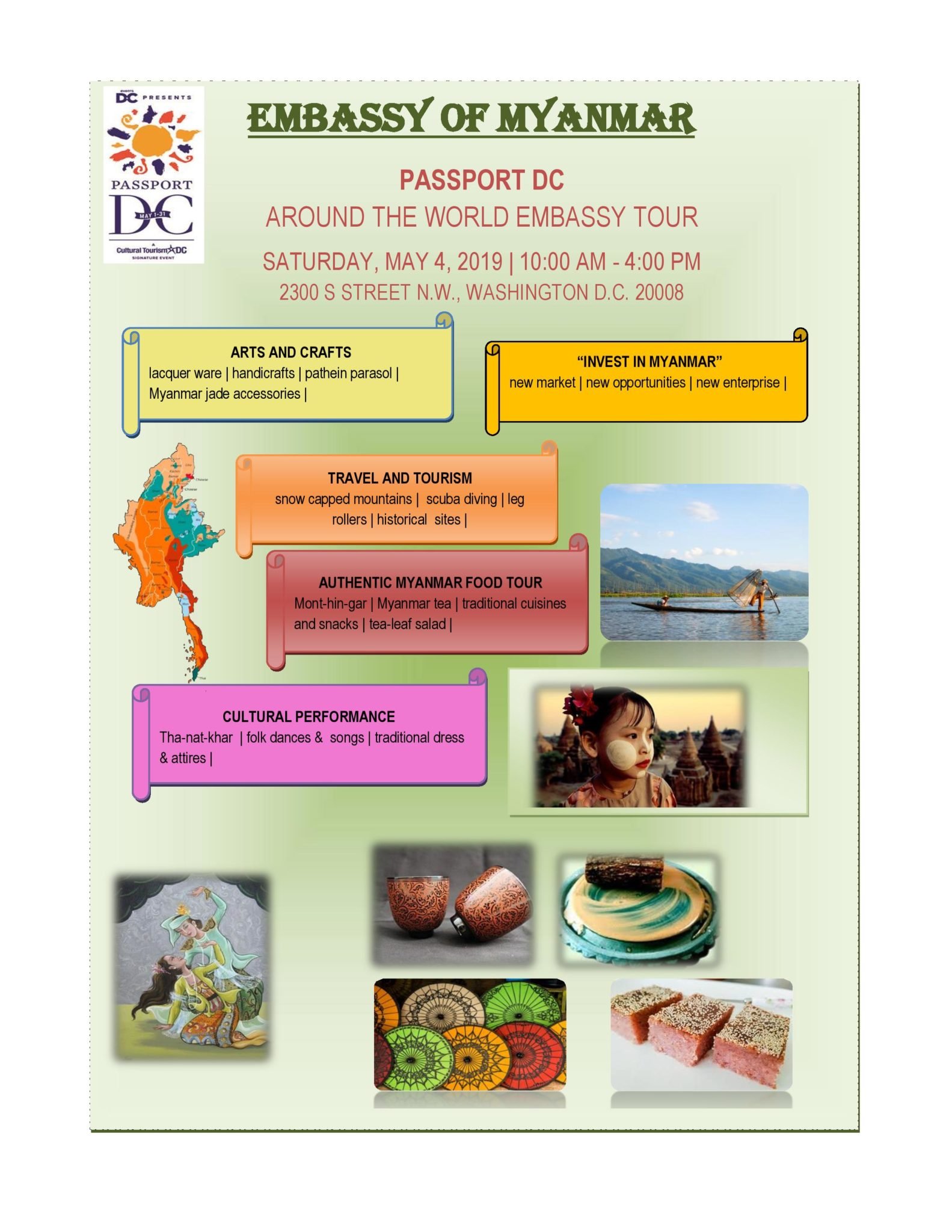
Around the World Embassy Tour (Saturday May 4, 2019)
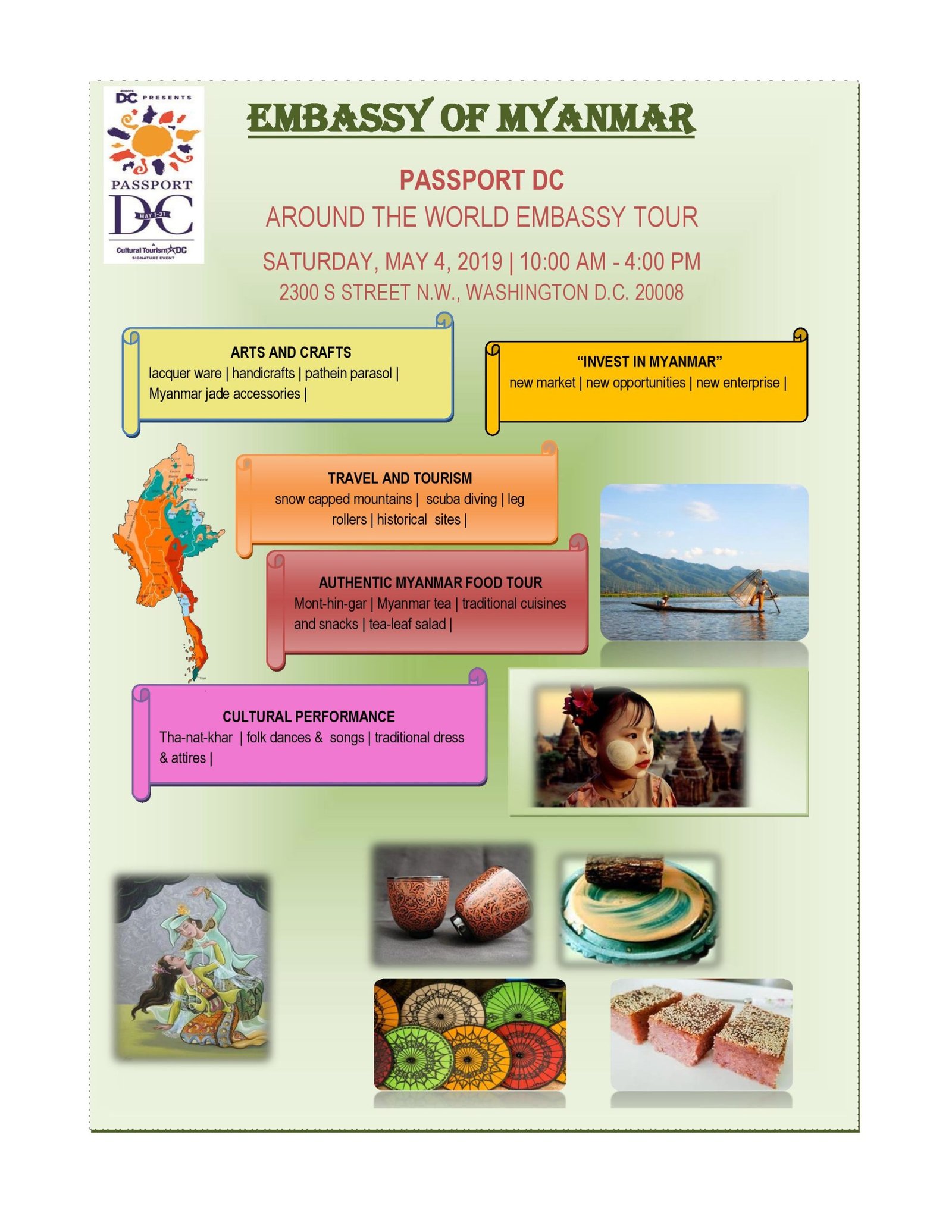
Arts and Crafts, Invest in Myanmar, Travel and Tourism, Authentic Myanmar Food Tour, Cultural Performance ….Click here for media release (PDF)
Visit Myanmar and never leave Washington: May 4, 2019
On Saturday, May 4th 2019, Myanmar embassy joins more than 75 other nations participating in Passport DC, when it opens its doors suring Around the World Embassy Tour beginning at 10:00 am.
Contact: Ms. Ohn Mar Aye, Myanmar Embassy, Washington, DC (myanmarecousa@gmail.com)
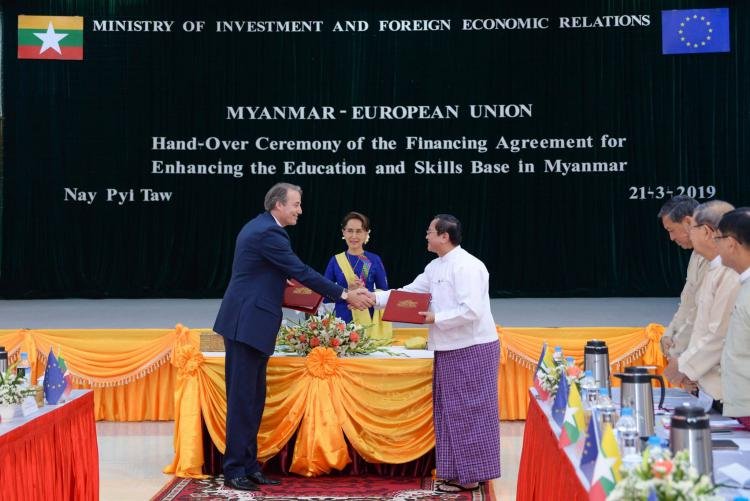
EURO 221 million to support education reform
Launch of the European Union’s first budget support programme in Myanmar: EUR 221 million to support education reform took place in Naypyitaw, Myanmar on
22/03/2019. The EU’s support will contribute to equal access to better quality education for all students in Myanmar.
Peace Corps Expands To Magway Region
April 5, 2019
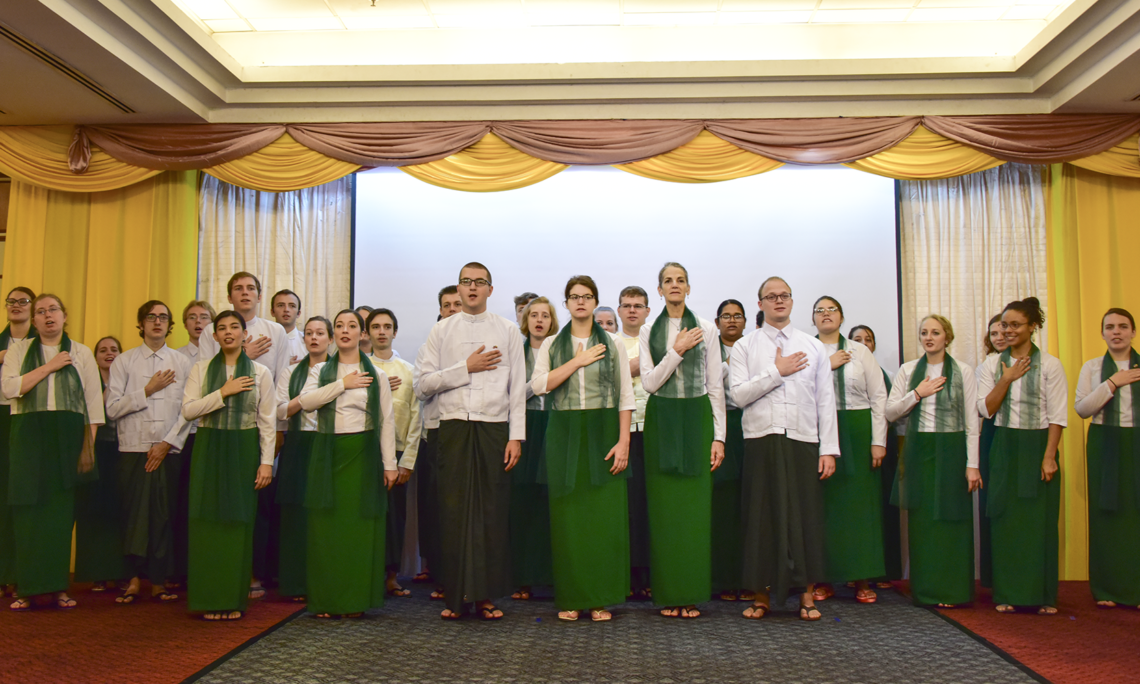
YANGON — Today, U.S. Ambassador Scot Marciel swore in 32 new Peace Corps Volunteers, nearly doubling the total number of Peace Corps Volunteers in Myanmar. The Volunteers sworn in at the ceremony at the Summit Parkview Hotel will serve for two years, teaching English at basic education middle and high schools in Bago Region, Mon State. This year, they will also teach at schools in Magway Region for the first time. They join 42 Peace Corps Volunteers who are currently serving in Myanmar. Union Minister for Education Dr. Myo Thein Gyi made remarks at the event, welcoming the Peace Corps Volunteers. Yangon Chief Minister U Phyo Min Thein, Magway Chief Minister Dr. Aung Moe Nyo, other Government of Myanmar, regional, and local officials, representatives from collaborating schools, and local families attended the event.